

DescriptionBanana LeavesOrigin: Bangkok, ThailandBanana leaves are large, flexible, and durable leaves derived from banana plants (genus Musa). They are widely used across tropical and subtropical regions for culinary, cultural, and decorative purposes.1. Characteristics:Texture: Smooth, waxy surface with water-resistant properties.Shape: Long, oblong, and symmetrical, with visible central veins.2. Nutritional Information (per 100 grams)NutrientAmountCalories~15-20 kcalProtein~1 gTotal Fat~0.5gSaturated Fat~0.1 gCarbohydrates~2-3 gFiber~2-3 gIron~0.01 mg3. Health Benefits:Antioxidant Properties: Contains polyphenols (like EGCG) that transfer to food during cooking, reducing oxidative stress and inflammation.Antibacterial Properties: Natural compounds help prevent foodborne illnesses.Low-Fat Cooking: Non-stick surface reduces the need for oils, promoting heart-healthy meals.Nutrient Retention: Preserves vitamins and moisture in food during steaming or grilling.Eco-Friendly & Non-Toxic: A sustainable alternative to plastic, avoiding chemical exposure.Skin Healing: Traditional use for burns, rashes, and wounds due to cooling and anti-inflammatory properties.Enhances Flavor: Adds a subtle earthy aroma to food, reducing the need for excess salt or seasonings.4. Popular Cooking Methods:Wrapping and Steaming: Used for dishes like tamales (Latin America), idlis (India), and sticky rice (Southeast Asia). Retains nutrients and adds flavor.Wrapping and Grilling: Protects food from direct heat, keeps it moist, and infuses a smoky flavor. Common for grilled fish, jerk chicken, and seafood.Baking: Acts as a natural liner for baking dishes like Cochinita Pibil (Mexico) or baked fish. Keeps food juicy and flavorful.Frying/Roasting: Lining with banana leaves prevents sticking and imparts a subtle aroma.5. Popular Dishes:India:Puttu (steamed rice and coconut cakes).Meen Pollichathu (spicy fish grilled in banana leaves).Southeast Asia:Nasi Lemak (coconut rice).Otah-Otah (grilled fish paste).Latin America:Tamales (corn dough with fillings).Cochinita Pibil (slow-cooked pork).Caribbean:Pepperpot Fish and Jerk Chicken (grilled in banana leaves).Pacific Islands:Lūʻau (slow-cooked pork).Palusami (taro and coconut dish).Other:Bibingka (rice cake from the Philippines).Bánh Chưng (sticky rice cake from Vietnam).6. Cleaning and Preparation:Cleaning:Rinse under cold running water to remove dirt and dust.Wipe with a cloth or soak briefly if needed.Dry with a cloth or air dry.Preparation for Cooking:Soften: Heat over an open flame or dip in boiling water to make them pliable.Cut: Trim to desired size using scissors or a knife.Remove Veins (Optional): Trim the thick central veins for easier wrapping.Usage:Wrap food for steaming, grilling, or serving.Store in the fridge for a few days or freeze for longer storage.7. Storage Conditions:Short-term Storage:Refrigerate: Wrap banana leaves in plastic and store in the fridge for up to 3-4 days.Long-term Storage:Freeze: For longer storage, wrap them in plastic and freeze for up to 6 months.Tip: Before using frozen banana leaves, thaw them at room temperature or warm them briefly to restore flexibility.
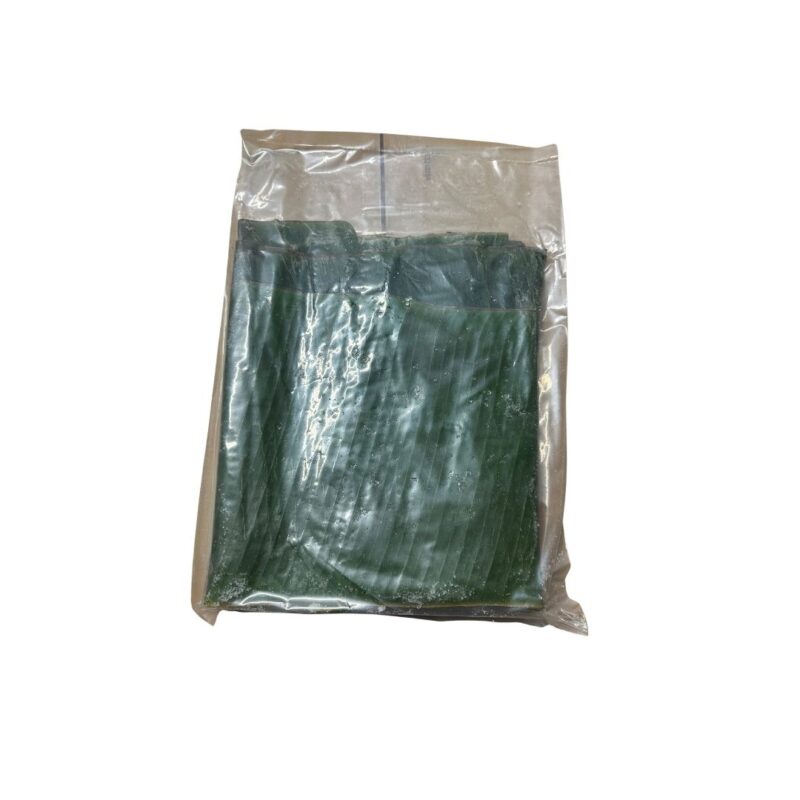


Banana Leaves 454g Asian Choice
$ 4.46