



DescriptionFumbwa Eru LeavesOrigin: CameroonFumbwa Eru Leaves are a key ingredient in a popular dish in Central and West Africa, especially among the Congo and Cameroonian cuisines. Eru leaves, also known as “Eru” or “Gnetum africanum”, come from a plant native to the tropical forests of Central Africa.1. Characteristics:Botanical Characteristics:Scientific Name: Gnetum africanumPlant Type: Evergreen vine or shrub, found in tropical forests, mainly in Central and West Africa.Flavor and Texture:Flavor: Earthy, slightly bitter, and herbal, with a rich taste that softens when cooked.Texture: When fresh or cooked, the leaves become tender and slightly slimy, similar to okra. This makes them a great thickening agent for stews and soups.Culinary Use:Preparation: Eru leaves are often chopped or sliced before cooking. They are usually added to dishes like Fumbwa (Eru stew) and Eru soup.Cooking Properties: The leaves cook down to a soft texture and absorb surrounding flavors. When dried, they are often rehydrated before use.Nutritional Profile:Rich in Fiber: Beneficial for digestive health.High in Vitamins: Particularly vitamin A, which supports vision, and some B-vitamins for overall health.Minerals: Contains calcium, iron, and magnesium, promoting bone and blood health.Physical and Storage Properties:Fresh: Eru leaves are soft and tender, and should be stored in a cool place or refrigerated if used within a few days.Frozen: They retain their characteristics for several months when properly stored in airtight packaging.Dried: When dried, the leaves are brittle but can be rehydrated and regain their tender texture upon cooking.Cultural Significance:Eru leaves are highly valued in Central African and Cameroonian cuisines. They are an essential part of traditional dishes like Fumbwa and Eru Soup, making them a staple in many households. They are also used in traditional medicine for various health benefits.These characteristics highlight the unique role Fumbwa Eru leaves play in both culinary and cultural contexts.2. Nutritional Information (per 100 grams)NutrientAmountCalories~30-40 kcalProtein~2-3gTotal Fat~0.5-1 gSaturated Fat~0-0.1 gCarbohydrates~5-7 gFiber~3-5 gIron~2-3 mg3. Health Benefits:1. Supports Digestive HealthHigh in Fiber: The dietary fiber content helps promote healthy digestion, prevent constipation, and maintain regular bowel movements. It also supports the growth of beneficial gut bacteria.2. Boosts Immune SystemRich in Vitamin A: Vitamin A plays a crucial role in maintaining the health of the immune system, supporting vision, and promoting healthy skin.Antioxidants: Eru leaves contain antioxidants that help protect cells from oxidative damage and reduce inflammation, further strengthening the immune response.3. Promotes Bone HealthGood Source of Calcium and Magnesium: Both minerals are essential for bone development and maintenance. Calcium supports bone density, while magnesium is important for bone strength and muscle function.4. Enhances Iron LevelsContains Iron: Eru leaves provide iron, which is necessary for the production of hemoglobin and red blood cells, helping to prevent anemia and improve oxygen transport in the body.5. Supports Heart HealthLow in Saturated Fat: Eru leaves contain almost no saturated fats, which makes them heart-healthy. Low saturated fat intake is linked to a reduced risk of heart disease and improved cholesterol levels.6. Aids in Weight ManagementLow in Calories: With only around 30-40 calories per 100g, Eru leaves are an excellent addition to weight management or calorie-conscious diets, providing nutrients without excess calories.7. Improves Skin HealthVitamin A & Antioxidants: Vitamin A, along with the antioxidants found in Eru leaves, helps maintain healthy skin by reducing inflammation and supporting cellular repair.8. Anti-inflammatory PropertiesAnti-inflammatory Compounds: The antioxidants and bioactive compounds in Eru leaves may help reduce inflammation in the body, which is beneficial for conditions like arthritis or general muscle and joint pain.9. Supports Muscle FunctionMagnesium Content: Magnesium is essential for muscle function, nerve signaling, and overall cellular health, making Eru leaves beneficial for muscle relaxation and reducing muscle cramps.10. HydrationMoisture Content: Eru leaves, when cooked, retain moisture and can contribute to hydration, especially in stews and soups.4. Popular Cooking Methods:Stewing:Often used in Fumbwa (Eru stew) where the leaves are simmered with palm oil, meat, fish, and spices.Soup:Commonly added to Eru Soup, where they are cooked with various meats, fish, and seasonings.Boiling:Eru leaves can be boiled and mixed into other dishes like porridge or served with rice.These methods help retain the nutritional value and flavor of the leaves, making them an essential ingredient in traditional African cuisine.5. Popular Dishes:Fumbwa (Eru Stew):A popular Cameroonian dish made with Eru leaves, cooked with palm oil, meat, fish, and spices to create a flavorful, hearty stew.Eru Soup:A Cameroonian soup where Eru leaves are combined with various meats, fish, and seasonings for a rich and nutritious meal.Eru with Porridge or Rice:Eru leaves are often added to porridge or served alongside rice to enhance flavor and texture.These dishes showcase the versatility and importance of Eru leaves in Central African cuisine.6. Cleaning and Preparation:Cleaning:Rinse: Wash the Eru leaves thoroughly under cold running water to remove any dirt, dust, or insects.Wipe: Use a clean cloth to wipe them down or soak briefly in water if needed.Dry: Pat the leaves dry with a cloth or allow them to air dry.Preparation:Chop: After cleaning, chop the Eru leaves into smaller pieces if required for your recipe.Soften (if needed): Fresh Eru leaves can be softened by briefly steaming or boiling them.Remove Stems (optional): Some people remove thicker stems for better texture and ease in cooking.By cleaning and preparing the Eru leaves properly, you ensure they’re ready to be used in your dishes like Fumbwa stew or Eru soup.7. Storage Conditions:Fresh Eru Leaves:Refrigeration: Store fresh Eru leaves in the refrigerator. Place them in a plastic bag or container to keep them fresh for up to 3-4 days.Frozen Eru Leaves:Freezing: For longer storage, freeze Eru leaves. Wrap them tightly in plastic or store in an airtight container or freezer bag. They can be kept for up to 6 months.Usage: Thaw the leaves before cooking or use directly from the freezer if needed.Dried Eru Leaves:Cool, Dry Place: Store dried Eru leaves in a sealed container in a cool, dry place. They can last for up to 1 year.Rehydration: Before use, rehydrate dried Eru leaves in water or add directly to dishes while cooking to soften them.These storage tips ensure the leaves maintain their freshness and nutritional value for longer.
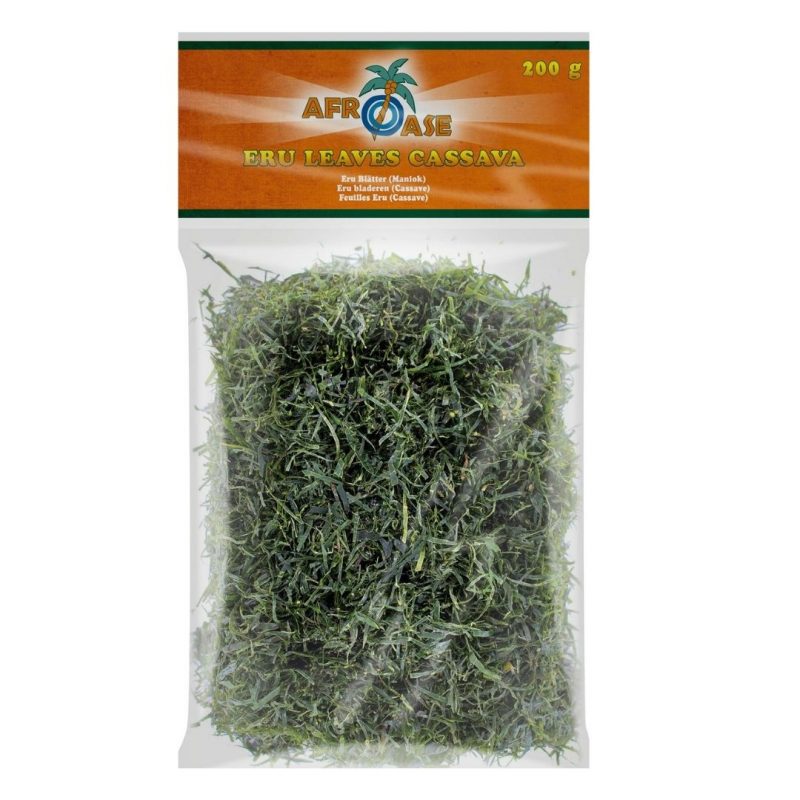


Fumbwa Eru 200g Afroase
$ 3.13